





Will interest rates drop? Tembo's base rate predictions
 Anya Gair, Head of Organic
Originally, the market was predicting that the Bank of England would cut its base rate by the middle of 2026, driven by easing inflation. However, expectations have now changed on the back of the conflict in the Middle East; the market is now expecting the base rate to rise at some point this year, potentially multiple times. This could significantly impact mortgage rates, savings accounts, and the housing market.
Here’s what you need to know and how it could affect you.
Key takeaways
- Despite earlier predictions of a cut in March, the Bank of England is expected to increase the base rate at some point in 2026, potentially rising multiple times, taking it as high as 5.25%.
- This change is driven by the conflict in the Middle East, causing a rise in oil prices, which is expected to drive up inflation.
- This has already pushed up swap rates - the financial benchmarks lenders use to price fixed-rate mortgages.
- Prospective buyers should move quickly to secure deals while they still can, particularly those planning on buying in the coming months, as mortgage rates are likely to stay at their current level or increase.
- Much will ultimately depend on how long the conflict continues and how significantly it affects global energy markets.
See how rate changes affect your options
Compare live mortgage rates from over 100 lenders and 20,000 mortgages instantly with our comparison table.
What will happen to the base rate in 2026?
The market is currently predicting that the Bank of England will raise the base rate rather than cut it, as was previously thought. This switch in expectations is due to the surge in oil prices caused by the ongoing conflict in the Middle East, which has raised fears of inflation rising. In fact, Andrew Bailey, the governor of the Bank of England, has warned that, as “higher inflation is unavoidable”, a higher base rate is likely.
Where we go from here will depend on the size and duration of the shock to energy prices. The longer this problem goes on and the longer the disruption to energy supplies goes on, the more difficult the scenario we’re in.

Andrew Bailey
So it's unsurprising that the market is now betting on the Bank of England's MPC raising the base rate at least once this year, with some predicting multiple increases. The Bank laid out three scenarios for what might happen to the economy depending on the impacts of the conflict in the Middle East - and all three see inflation rising. But the stagnation in the UK's jobs market and sluggish economic growth mean a base rate rise is by no means certain.
We could see a base rate rise as early as the next MPC meeting on the 18th June, if inflation remains high. But as ever, this is not guaranteed!

Brad Wright
Senior Mortgage Advisor
Why is the Bank of England expected to hold rates now?
The conflict in the Middle East has pushed up oil prices, and this is expected to cause inflation to start rising again, having a knock-on effect on the cost of everyday essentials. The Bank of England will likely hold off on cutting the base rate until inflation starts falling again, and is expected to increase it to try to bring inflation down.
How will a base rate rise affect mortgages?
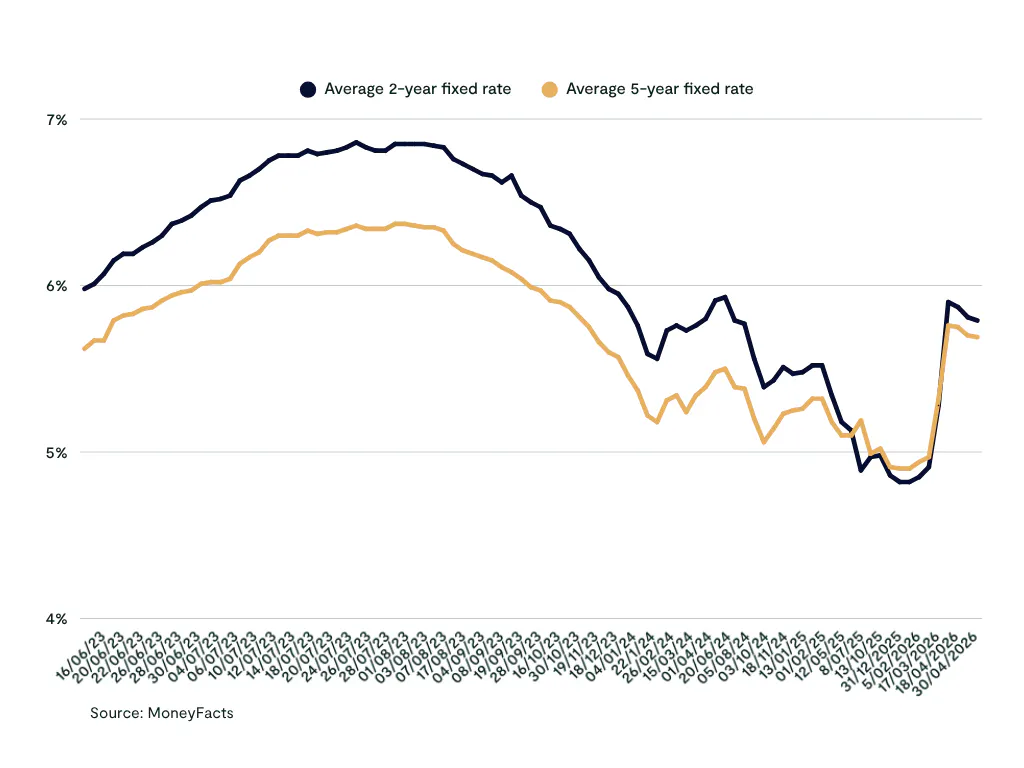
The base rate influences the interest rates mortgage rates offer on their own deals. So if the base rate does rise from 3.75% to potentially as high as 5.5%, mortgage rates are likely to remain steady at their current level, if not increase, depending on what happens to inflation. Although we've seen some major lenders cut mortgage rates in recent weeks, this is unlikely to be a sign of a downward trend. Instead, this is reflective of lenders readjusting their mortgage deals in line with the latest expectations for inflation and the base rate, on the back of the fragile peace talks related to the conflict in the Middle East.
In response, we’ve seen a noticeable surge in demand from borrowers who are keen to lock in lower rates before further increases take effect. Many prospective buyers are moving quickly to secure deals while they still can, particularly those who had already been planning to purchase in the coming months.
With that said, the market remains unsettled. Much will ultimately depend on how long the conflict continues and how significantly it affects global energy markets.
While there's no way of knowing for certain, mortgage rates could go higher still if the conflict in the Middle East continues. So if you're on the fence, don't wait to find out your options!
Brad Wright
Senior Mortgage Advisor at Tembo
Here's what the base rate rise could mean for you:
- Fixed-rate mortgages: If your fixed deal is ending, or you’re hoping to buy soon, you might find you are now offered higher mortgage rates than you were a few months ago. But this doesn't mean buying is impossible, but it's important to understand what rate you could get and lock in while you can, as mortgage rates may change quickly.
- Variable-rate mortgages: Average standard variable rates (SVRs) are still sitting well above both newly priced fixed-rate deals and tracker mortgages, meaning borrowers who revert to their lender’s SVR at the end of a fixed-rate deal may face a sharp increase in monthly repayments. Don't bury your head in the sand; see what options you have now.
- Coming to the end of a fixed-rate deal? You might find that the deal you had your eye on is no longer available, and the new rates you're eligible for are higher than a few weeks ago.
In times like this, it's important to seek expert advice and lock in on the best mortgage deal available to you while you can. Remember, mortgage offers typically last between 3-6 months, and with Tembo's rate checking service, you can reapply at no extra cost if rates drop down the line.
You might also like: How long should I fix my mortgage for?
Want to stay ahead of the latest changes?
See what mortgage rates you could be offered, without applying. Complete your details online today.
What's the outlook for the housing market?
Expectations have shifted dramatically since the conflict in the Middle East escalated in late February. Before then, the market was expecting 2026 to bring lower inflation and falling mortgage rates, which could have sparked life back into the property market.
Now, average mortgage rates have climbed to above 5% for the first time since late 2024, with lenders like Barclays and Nationwide pulling their sub-4% rates to quickly reprice amid the turmoil. The cheapest deals now have a shelf life of a couple of days, so if you're exploring your options, it may be worth locking in a deal before it is withdrawn from the market.
Although things have calmed down since a few weeks ago, we're unlikely to see mortgage rates come down any time soon. With much resting on the impact of the Middle East conflict on the UK economy, we may see buyers, including home movers, choose to sit on the sidelines, waiting for more stable waters.
This dampener on demand could impact house price growth, increasing by a marginal amount over 2026 or potentially decreasing. Regions with the most stretched affordability, like London and the South East, are expected to see the sharpest price pressure from rising mortgage rates, so are likely to be the hardest hit by any house price declines.
However, this doesn't mean it'll be impossible for you to buy this year. Wages are currently growing faster than house prices, which helps offset some of the increased monthly mortgage costs for new buyers. This improves affordability for buyers, helping to make homeownership possible even in uncertain times.
Plus, despite the negative headlines, buyer confidence appears to be holding up for now. At Tembo, we've seen customer enquiries remain strong, and the positive momentum in the housing market so far in 2026 is continuing. While mortgage rates are once again on an upward trajectory, it hasn’t yet translated into a slowdown in people looking to buy or move home.
We’ve seen a noticeable surge in borrowers wanting to lock in rates while they still can, particularly those who planned to buy in the coming months. The good news is that buyer confidence appears to be holding up. Customer enquiries remain strong, and the positive momentum we’ve seen in the housing market so far in 2026 is continuing.

Richard Dana
CEO at Tembo
What about saving rates?
While higher interest rates are difficult for borrowers, they can be good news for savers. We've seen savings rates remain relatively strong compared to the ultra-low levels seen a few years ago, especially on tax-efficient accounts like easy access Cash ISAs, with some of the top rates as high as 4.30% AER (variable).
Now is the time to make the most of your tax-free ISA allowance by opening a new account or switching providers to make the most of the best rates. It might make sense to look at transferring to a provider offering the best rates or locking in a fixed-rate deal soon.
What should you do next?
It's impossible to predict how long the conflict will last, whether mortgage rates will continue to track upwards or how long current deals will stay available. Despite holding the base rate this month, the Bank has indicated there could still be scope for rate cuts later in 2026 if inflation falls. However, much will depend on how the global economic situation develops. If energy prices remain elevated and inflation rises again, the Bank may keep interest rates higher for longer or raise the base rate again.
Change can be confusing, but you don’t have to figure it out on your own. If you want help buying your first home, remortgaging, or making sense of what’s happening in the market, we’re here for you.
Discover your mortgage options with the UK's Best Mortgage Broker
As an award-winning mortgage broker, we specialise in helping buyers, movers, and remortgagers maximise their affordability. Our expert team is available seven days a week, ready to help you make the right decisions with confidence.